
Sources for Hartford Previous Residents
One address can have several histories at once. Deeds show recorded transfers. Assessor and GIS fields connect a current parcel to owner, mailing, legal, and sale clues. City directories show dated occupants and occupations. Census schedules add household and relationship data. Sanborn maps show building form and use. Obituaries and probate can close a death or estate trail. Each source has a different measure of time and a different limit on what it proves.
| Source | Years it covers | Where held | What it can show |
|---|---|---|---|
| Hartford land index | 1/2/1964-present | SearchIQS / City Clerk | Grantors, grantees, instruments, dates; early index is not fully imaged |
| Hartford land images | 12/28/2001-present | SearchIQS / clerk | Deed, mortgage, map, or other instrument image where available |
| Hartford maps | 8/1/1863-present | SearchIQS, clerk, GIS | Lots, plans, street names, subdivisions, and parcel geometry |
| City and reverse directories | 1838-1959 runs and supplements | HPL, CSL, CHS, FamilySearch, LOC | Occupant, business, home, spouse, address, and household clues |
| Federal census | 1790-1950 open schedules | NARA and partners | Household, age, relationship, occupation, address, enumeration district |
| Sanborn maps | Hartford 1922-August 1950 item | Library of Congress | Building footprint, use, stories, materials, and nearby geometry |
| Obituary / probate | Runs vary; PD-01 online from 1/5/2011 | HPL, CSL, CHS, newspapers, Probate | Death, relatives, fiduciary, heir, last-address lead |
The coverage table is a starting map, not a promise that each year or image is online. A gap may be a missing volume, a catalog-only item, an access restriction, or a changed address.
Hartford Past Residents: Current Parcel
Begin with the address as it exists now. In Hartford’s Property Information Viewer, search by address and copy parcel number, GIS PIN, owner, situs, mailing address, LegalRef, TaxMap, LastGrantor, LastSaleDate, LastSalePrice, living units, and YearBuilt. The owner is an assessed owner. The mailing address is correspondence. Neither field alone is a complete occupancy record.
Use the parcel polygon and legal reference as the fixed point for earlier research. A current street number may sit on an older parent lot, a subdivision, or a condominium card. If the card shows a number range or CondoNumber, follow the plan rather than assuming that one result equals one household or one historical house.
Assessment information has a date. Hartford cites a 2021 revaluation and a next scheduled revaluation in 2026, with October 1 as the assessment date. Note that date before comparing the owner with a deed or directory entry.
Hartford Past Residents: Current Grantee
Connect the current parcel to a deed by searching the current owner as grantee around the LastSaleDate in Hartford SearchIQS. SearchIQS is the online index route, but the Hartford Town and City Clerk remains the municipal custodian. The generic help describes Party 1 and Party 2, party-role behavior, date ranges, document group, document description, town, book/page, instrument number, and case number. Hartford’s advanced form was session-gated during inspection, so verify local dropdown labels at the live portal.
When the purchase deed is available, copy the grantor, grantee, record date, book/page or instrument number, legal description, plan reference, consideration if shown, and image status. Search the grantor as an earlier grantee. If the party is a trust, estate, or company, search the entity and the related signer or fiduciary without assuming that each name is a resident.
The chain is a historical lead. A complete title search needs professional review and a full instrument set. A mortgage, release, assignment, foreclosure registration, attorney, or mailing recipient is not automatically the owner.
Hartford Past Residents: Grantor Chain
Work backward one transfer at a time. Use the prior deed’s legal description and plan reference, not just the street address. Repeat the name search in an earlier date range. Search initials, prior surnames, punctuation variants, and entity spellings. Compare the parcel number, lot description, map reference, and recording date before deciding that two entries belong to one property.
- Normalize the current address and write down parcel, ZIP, situs, and legal references.
- Search the current owner as grantee near the last sale and open the purchase instrument when possible.
- Read the grantor, legal description, plan, book/page, and instrument number from that record.
- Search the grantor as an earlier grantee, using name variants and a narrower date range.
- Use maps, probate, obituary, tax, or directory records to explain a changed name or gap.
- Stop at the online boundary and request clerk volumes, microfilm, or library/archive help for older deeds.
- Grantor
- The party conveying an interest in the recorded instrument.
- Grantee
- The party receiving an interest in that instrument.
- Legal description
- Deed or plan language that identifies the land beyond a street number.
- Chain of title
- A sequence of recorded transfers; it is not itself a title opinion.
Previous residents become more visible when the property chain and the household sources agree on a date. One name in a deed is only one side of the trail.
Hartford Past Residents: Index Cutoffs
The exact Hartford availability PDF places land-record index data from January 2, 1964 through December 27, 2001 and index data plus images from December 28, 2001 forward. Maps have index and image coverage from August 1, 1863. Current SearchIQS help reports a different older image boundary, so the precise PDF should be rechecked before publication or a request.
The cutoff is a digitization boundary, not the beginning of Hartford land records. Before 1964, use the Town and City Clerk’s books, microfilm, State Library or FamilySearch catalogs, HPL archives, and historical map collections. An online blank is not evidence that no deed exists. A missing image after the cutoff can also require a clerk call or mail request.
Note the index or image status in the house-history ledger. A later researcher should be able to tell whether a deed was not found, not indexed, not imaged, or not publicly available.
Hartford Past Residents: Map Gaps
Hartford maps can carry a property backward when a deed search stalls. SearchIQS maps extend to 1863, while HartfordGIS supplies tax, street, parcel, planning, zoning, historic, and building layers. A subdivision plan can show lot geometry, street names, adjacent owners, easements, block and lot numbers, bearings, and survey information. A map is not a title opinion, but it can reveal why an older description does not match a current address.
Sanborn fire-insurance maps add building context. The Library of Congress item is a Hartford, Hartford County, Connecticut volume from 1922-August 1950, Volume 3, with 70 sheets and West Hartford as a secondary location. A sheet can show footprint, stories, construction, use, and neighboring geometry. It does not name the occupants.
Compare the Sanborn sheet with a directory year, permit date, and current parcel. A building can survive while its number, use, lot, or surrounding street changes.
Hartford Past Residents: Reverse Books
When the address is known but the earlier name is not, use an address-first or criss-cross directory. Library of Congress guidance explains a street-and-number arrangement, while HPL and the State Library can identify local city, suburban, telephone, house, family, or reverse copies. National LOC holdings cover many years from 1930-2005, but the exact Hartford volume must be confirmed rather than assumed.
Gardner’s 1840 directory is an earlier bridge. Its street guide uses directions and intersections, and its entries use “h” for home in many lines. A business address may come first. “Widow” or “boarding house” can signal a household or lodging clue. Read the scan page and do not treat OCR as the authority.
The digital Geer volume gives a clear example of a dated page. Open the FamilySearch 1860-61 directory and retain its page image, title, and printed spelling.
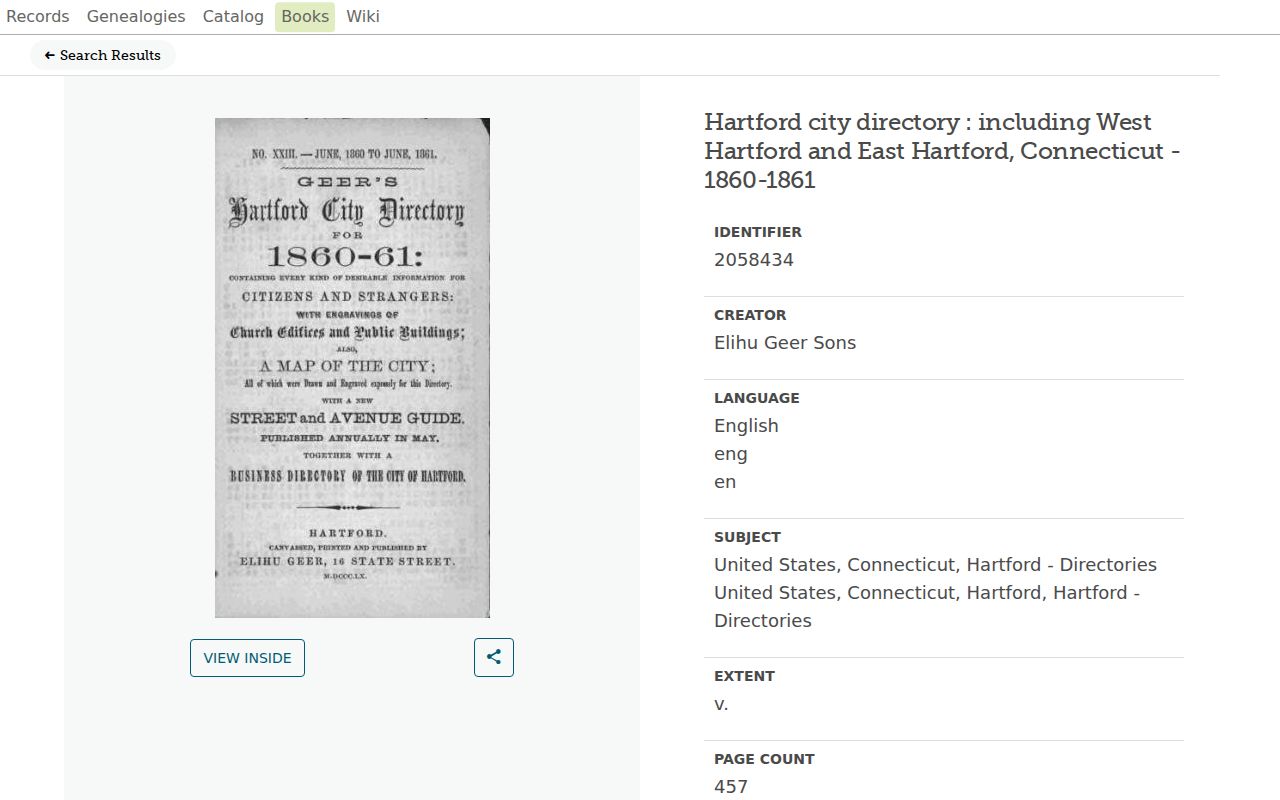
The scan can turn an old number into a name. Use a later deed, census, vital, obituary, or probate record to test whether the person remained at the property.
For the street-first method, review the Library of Congress reverse-directory guide before asking HPL or CSL for a local copy.
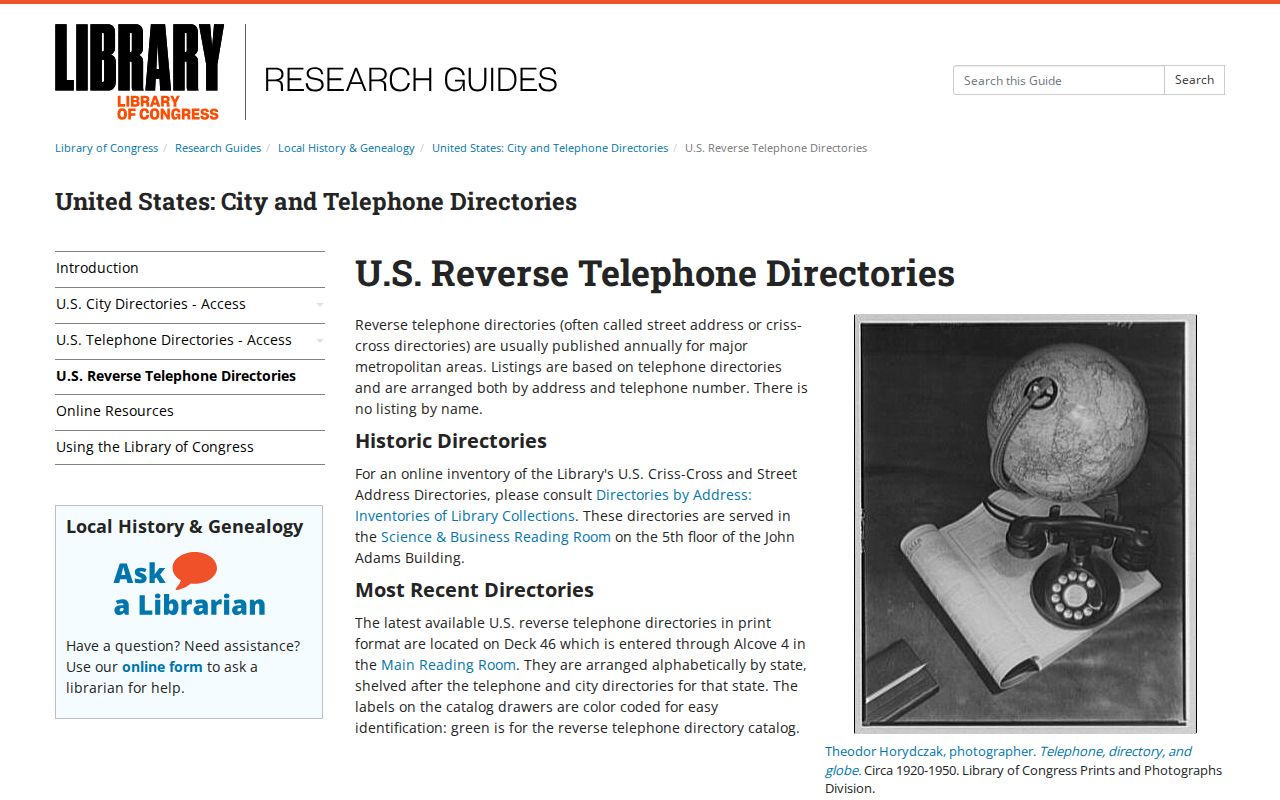
An address-first result is a dated occupant lead. It should not be presented as a current person record.
Hartford Past Residents: Census Pairing
Federal census schedules supply household details that a city directory may omit. NARA’s latest open individual schedule is 1950 under the 72-year rule. Search by name, city, county, state, enumeration district, and address. When OCR misses a name, use the district map and street sequence. A directory publication year and a census collection date can differ, so record both rather than treating them as the same day.
Follow a repeated household across nearby directory years. Note street number, spouse in parentheses, occupation, “removed to” language, boarding or institution clues, and successor occupants. Then compare census age, relationship, occupation, address, and enumeration district. The State Library’s Francesco DiCorleto example follows a 1911 directory line into marriage or vital records, the 1920 and 1930 census, and an obituary.
The method works best when the address remains stable. If a street name changes, use a plan, Sanborn map, tax map, or legal description before joining two entries.
Hartford Past Residents: Sanborn Dates
Sanborn maps can date a building’s footprint, use, number of stories, materials, and relation to nearby lots. Hartford Accela, the Building Permit Viewer, and the Scanned Document Viewer can add permit or inspection dates, descriptions, applicants, licensed professionals, and status when public. These records document a building or project, not every person who used the address.
Compare an older map sheet with the parcel LegalRef and a directory entry. A building may be known by a business, institution, boarding function, or street number that does not match the later residential label. Permits can explain an addition, conversion, demolition, or change in use. A 311 request can add an address-linked service event, but a request is not an adjudicated finding.
Keep the permit date and applicant role. Do not turn a project contact into a previous resident without another source.
Hartford Past Residents: Obituary Trail
An obituary can provide a death date, last residence, relatives, funeral location, and community connections. HPL, CHS, the State Library, Hartford Courant notes, Hartford Times material, and newspaper microfilm can supply leads. The exact obituary index years at HPL were not located in the public page, so ask the History Center rather than promising a fixed run.
Hartford Probate District PD-01’s online lookup starts January 5, 2011 for estate and trust data. A probate record can identify a decedent, fiduciary, heir, or attorney and connect a property to a family trail. Historic packets and estate files may need State Library or paper custody. Document access can require an interested-party rule, access code, public computer, or clerk approval.
Death and probate evidence can close a previous-resident trail, but “of Hartford” in an obituary is not the same as a street address. Verify with a vital record, deed, directory, or cemetery source when that distinction matters.
Bridge a Renamed Hartford Street
No official Hartford citywide renumbering or renaming year was confirmed in the research. Do not invent one. Use the 1840 street guide, old street names, Sanborn editions, clerk maps, tax maps, subdivision plans, and current GIS to bridge an older address. A street may be abbreviated, reoriented, shared with a neighboring town, or described by intersection instead of number.
Parcel splits and condominiums create another trap. A current card can represent a child parcel while an older deed uses a parent lot or a plan reference. Follow the legal description, TaxMap, and recorded map. A ZIP is not a historical address, and a Hartford County label is not proof that a county office held the deed.
Record the bridge in plain language: old street spelling, map or plan, modern street, parcel ID, and the evidence linking them. If the bridge remains uncertain, keep the two address histories separate.
Hartford Past Households: Directories
Previous residents are most visible when a deed chain and a dated household source overlap. City directories can show occupants, occupations, spouses, and home shorthand. Census schedules can show age and relationship. Obituaries can point to relatives and a last residence. Probate can connect an owner or decedent to an heir. None is a complete list of every person at the address.
Use the Hartford city directories collection for the publisher and year, the by-street record chain for a current parcel, and the library or archive when a scan or volume is missing. A historical directory may cover East or West Hartford, include a separate community section, or use an address that no longer exists in modern form.
Lawful house history. Research into Hartford previous residents is for family history, preservation, estate work, and personal curiosity. Do not use an old or current address to watch, harass, threaten, or harm a living person.
The strongest house history says what a source shows, when it shows it, and where the chain remains incomplete.