
Hartford Directory Collection Map
Hartford’s historical directory shelf starts in the early nineteenth century and becomes more regular in the Geer years. It is not a continuous current resident directory. Some volumes are digitized, some are on microfilm, some are reference-only, and some years were located in catalogs without a confirmed shelf call number. Treat every year as its own source and preserve the volume title, publisher, publication date, and page.
| Collection | Years or coverage | Where held | Access |
|---|---|---|---|
| Gardner’s Hartford City Directory | 1840, No. 3 | Genealogy reproduction, HPL/CSL verification | OCR and scan; confirm title spelling |
| Geer’s Hartford City Directory | 1842; 1846; 1850-56; 1858-59; 1863-64; 1867; 1869; 1871-73; 1875; 1887-96 | HPL, CSL, CHS, FamilySearch, microfilm | Year gaps and different formats |
| Geer digital volume | 1860-1861, 457 pages | FamilySearch digital library | Online scan and OCR |
| House and family address book | 1906 | HPL / CSL catalog search | Exact shelf location needs confirmation |
| Suburban supplements | 1905-06; 1913; 1915 | HPL, CSL, catalog searches | Useful for surrounding-town coverage |
| Price & Lee Hartford directory | 1959, 1,586-page catalog item | FamilySearch / HPL / CSL | Check scan or reference access |
The year list is a finding aid, not a promise that every page is online. A blank year can mean no publication, no surviving copy, a missing scan, or a catalog record that has not been connected to an image.
| Hartford directory milestone | What to verify |
|---|---|
| 1840 Gardner, No. 3 | Early street guide, business lines, home shorthand, and printed title. |
| 1842, 1846, and Geer runs | Publisher changes, year gaps, and the move toward a recurring local series. |
| 1860-1861 Geer volume | 457-page FamilySearch scan; cite the title page and surrounding street context. |
| 1887-1896 Geer coverage | Late nineteenth-century run; check the exact surviving volume before assuming continuity. |
| 1905-06, 1906, 1913, and 1915 | Suburban supplements and house or family address formats need separate catalog checks. |
| 1959 Price & Lee item | Large later catalog item; verify scan or reference access with HPL, CSL, or FamilySearch. |
Hartford Directory Publishers: Gardner and Geer
Gardner’s 1840 volume is an early local snapshot. Its title identifies an annual directory, No. 3, published in May 1840 by Case, Tiffany & Co. on Pearl Street. The pages mix names, occupations, business locations, and home clues. Geer’s Hartford directory becomes the main long-run series, with editions that sometimes include East Hartford and West Hartford. The coverage is rich, but the runs have gaps.
Search a surname in the alphabetical section, then inspect the street guide or address section. A business line may come before the home line. An entry marked “h” usually introduces the home address. Initials, spouse-in-parentheses, widow or boarding-house wording, and OCR punctuation can change the way a name appears. Copy the printed spelling in notes, then add a normalized spelling only as a search aid.
A Hartford directory volume can place a person in a work or home setting for one publication year. It cannot by itself prove that the person owned the property, stayed all year, or lived there when the next volume appeared.
Hartford Historical Directory Shelves
Hartford Public Library’s Hartford History Center is the first local reference stop. The Downtown branch at 500 Main Street lists local-history hours and reference access; the SAND/Ropkins branch at 1750 Main Street has the History Center Annex. HPL describes directories, newspapers and microfilm, obituaries, maps, photos, yearbooks, and Hartford City and Town Clerk archives. Give staff a surname, street, and approximate year so they can choose the right series.
The HPL archival catalog describes the Hartford Town and City Clerk Archives with a date span of 1635-2010, while particular series have narrower majority runs. The State Library History and Genealogy guide routes researchers to census, town documents, cemetery, church, court, and FamilySearch materials. CHS finding aids add civic, neighborhood, ethnic, newspaper, property, and directory records. State Library compact-shelving work has made current availability a call-ahead question.
The archive catalog shows how Hartford’s city material is organized. Search the Hartford Public Library archival catalog for directory, clerk, neighborhood, or street terms.
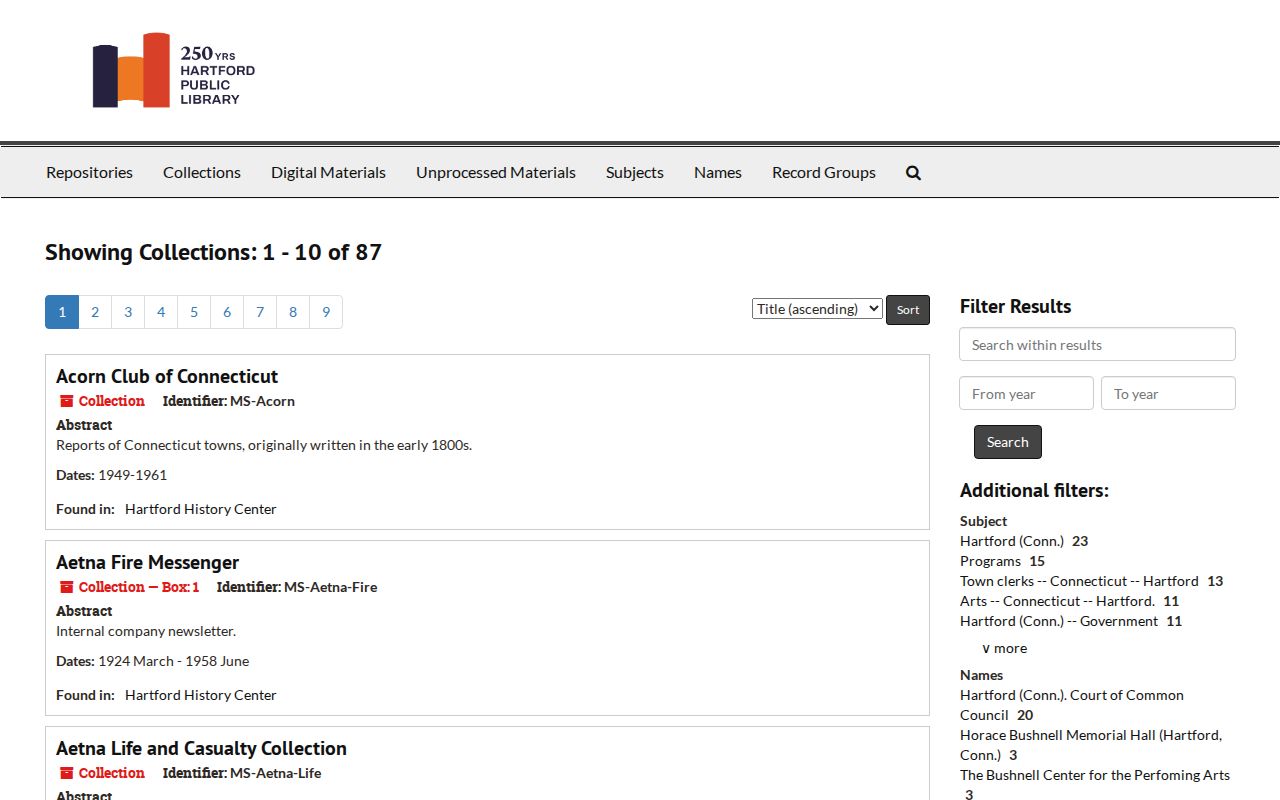
The catalog is a route to a collection, not a guarantee that every box is immediately on the shelf. Confirm restrictions, reproduction rules, and current access with the repository.
For an in-person reference visit, check Downtown Hartford History Center hours and contact details first.
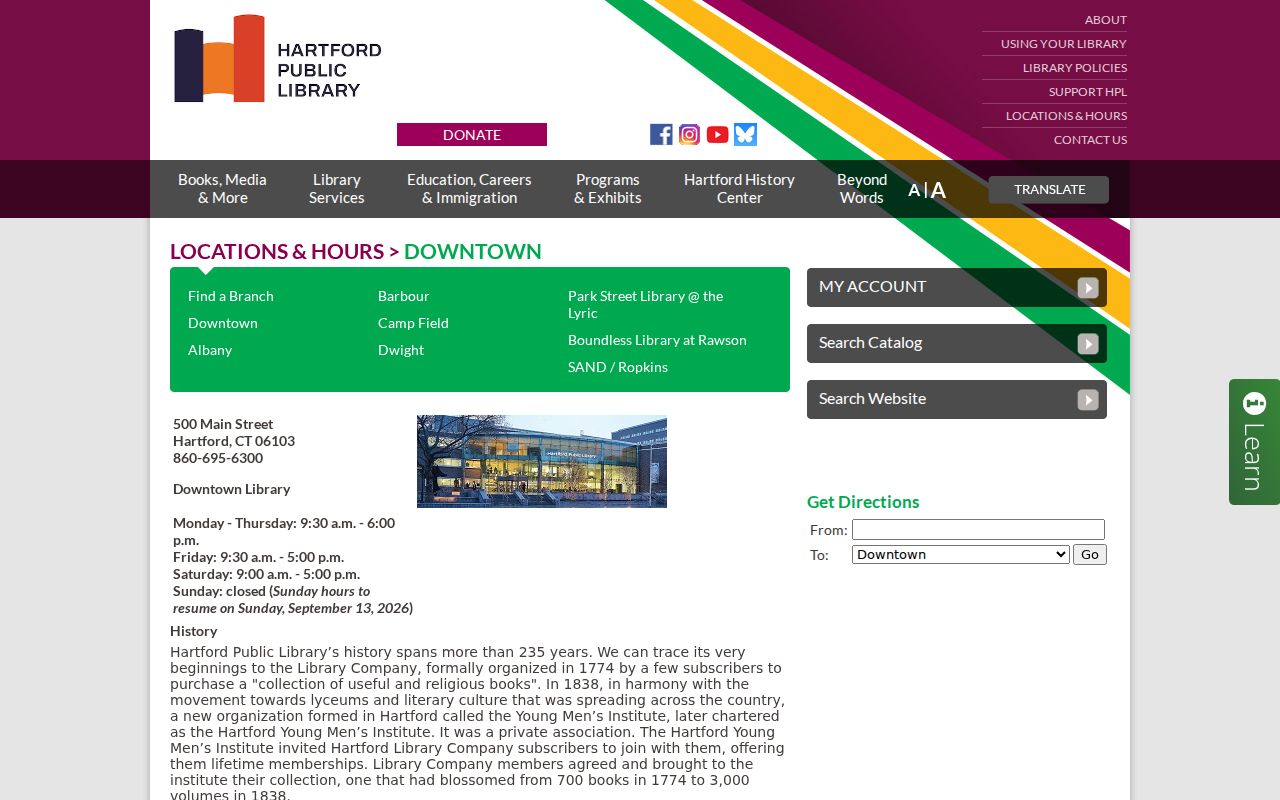
HPL’s local-history desk can also distinguish a directory volume from a telephone, reverse, suburban, house, or family address book, which prevents a search from stopping at the wrong format.
Hartford Geer 1860-61 Directory
The FamilySearch scan of Hartford City Directory, Including West Hartford and East Hartford, Connecticut, 1860-1861 is a valuable online anchor. The catalog identifies a 457-page digital item. Use the title page and page image as the authority when OCR drops punctuation or misreads a surname. A digital book makes the volume easier to search, but it does not remove the need to read the surrounding page and the street or business context.
Search a surname, record the page, and transcribe the entry as printed. Note occupation, business location, home notation, spouse or widow language, and any street direction. Then compare the same person in a nearby Geer year or an 1840 Gardner volume. If a household appears to move, check whether the street was renamed, the town boundary changed, or the entry describes work rather than residence.
The digitized title page is a useful verification point for the Hartford directory collection. Open the FamilySearch Geer scan and cite the page image when a name matters.
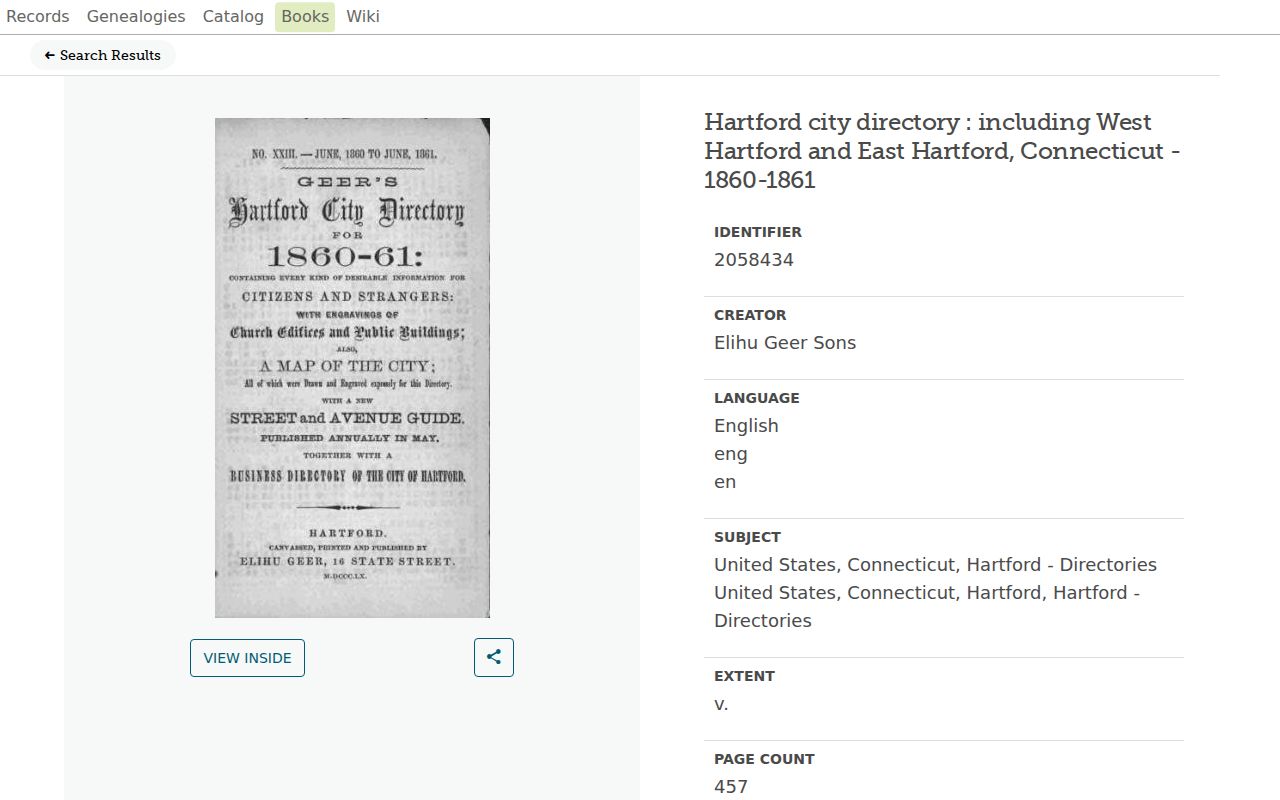
The scan provides the historical page, while a later deed, census, obituary, or vital record supplies an independent date or relationship check.
Reading a Hartford Directory Entry
Gardner’s 1840 entries show why a directory entry must be read as a small record, not a name list. The same line may hold a headword, occupation, business address, residence, and household clue. The first street can be a store, office, or shop. The “h” before a street usually marks home. A line such as “h rear” or “h over” describes a residence that may not look like a modern street address.
| Entry element | What it can mean |
|---|---|
| Name or headword | The printed person or household reference; preserve initials and spelling. |
| Occupation | Work identity that can help separate people with the same name. |
| Business address | Where a shop or office operated; not automatically the home. |
| “h” and home line | Residence shorthand, often after the business location. |
| Widow or boarding house | Household or lodging clue, not a full list of residents. |
- Criss-cross directory
- An address-first book arranged by street and number rather than only by surname.
- Householder
- The person named at a home address in a directory; the term does not identify every household member.
- Abbreviation key
- The publisher’s explanation of short forms, which should be checked in the scan because no complete key was verified in the 1840 OCR.
Two addresses can be more informative than one. A person who works downtown but lives on another street may be misclassified if the separator or home shorthand is skipped.
Hartford Geer Community Listings
The Connecticut Historical Society notes that Geer directories from 1843 through 1867/8 contain a separate “Colored Persons” section. That is both an indexing trap and a record of how the directory was organized. A surname search confined to the general alphabetical pages can miss the entry completely. Search the separate section, preserve the historical heading only as a citation to the source, and verify identity with records that supply independent context.
Hartford’s historical collections also include Italian-American, African American, Caribbean, Latino, church, neighborhood, fraternal, and institutional material in different repositories. A name can appear in English, Italian, Spanish, Polish, Portuguese, or another community record. CHS’s Capobianco finding aid ties directories to Hartford Courant notes, deeds, insurance papers, births, deaths, marriages, migrations, and Italian-language materials.
That community detail makes the directory more useful for family history, but it also makes a single search box less reliable. Ask a librarian for the collection’s original order and terminology before normalizing the entry.
Hartford Reverse and Criss-Cross Books
When the known fact is a house number, a reverse directory is the right format. Library of Congress guidance describes books organized by street and number, sometimes with telephone or location details. The national guide lists holdings across many cities and years from 1930-2005, but a Hartford-specific volume must be confirmed through the catalog or a reference desk. HPL and the State Library may have microfilm or shelf copies that are not represented by a simple web result.
Run the address-first search for the target year. Convert the occupant into a name-first directory entry, then follow the name into census, deed, vital, obituary, or probate records. Keep the street spelling and number exactly as printed. An older street guide may describe an intersection or direction instead of a modern number, so Hartford maps and Sanborn sheets can help bridge the wording.
The Library of Congress explains the street-first method and reading-room request process. Review the reverse-directory guide before asking for a Hartford volume.
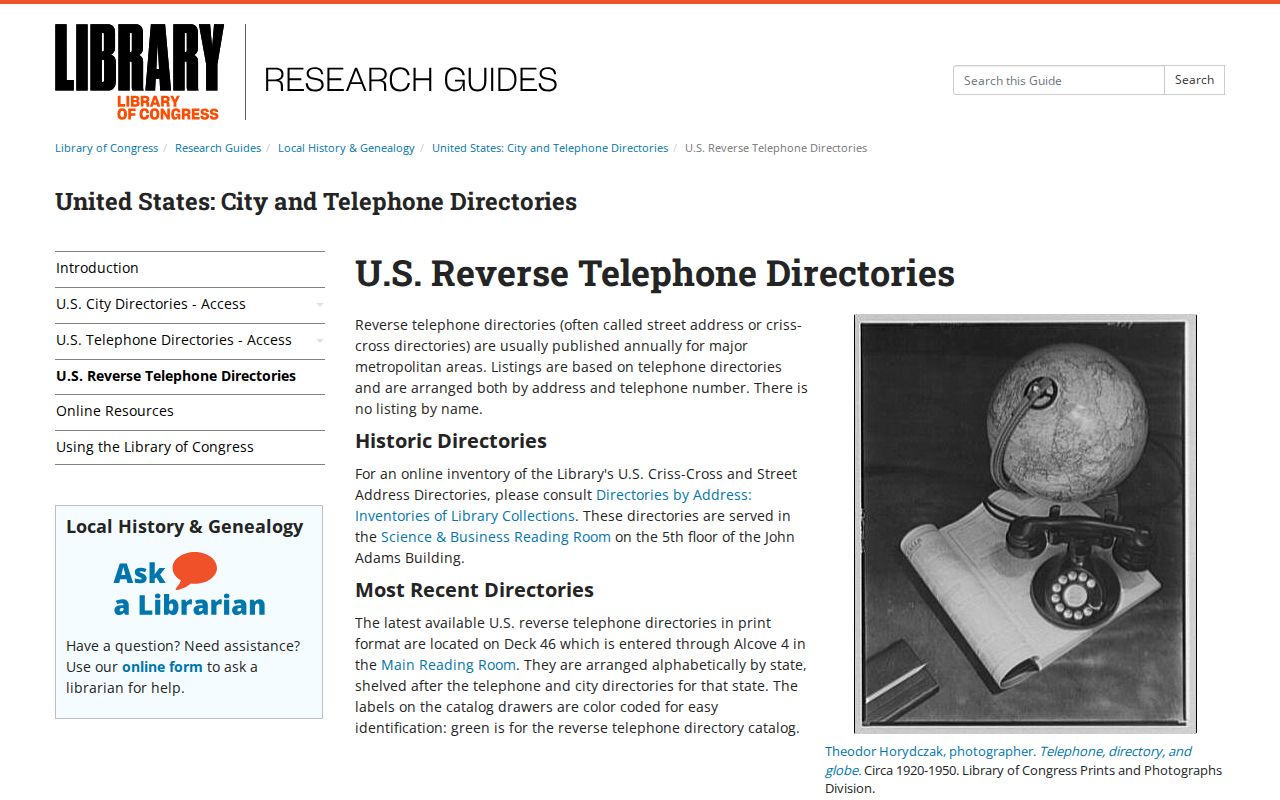
A reverse entry identifies a dated occupant lead. It does not turn into a current resident claim without later evidence.
Pair Hartford Directories with Census
Directory years become stronger when paired with a federal census schedule. NARA makes individual census schedules available through 1950 under the 72-year rule; 1950 is the latest open individual census and 1960 onward remains closed under that schedule. Search the city, county, and enumeration district, especially when OCR misses a surname. A directory street and a census address can corroborate one another, but their publication and collection dates may not match exactly.
| Step | Hartford history use |
|---|---|
| Directory year | Record the printed address, occupation, spouse, “h” line, and publication title. |
| Nearby census year | Check household, age, relationship, occupation, address, and enumeration district. |
| Property record | Use parcel, deed, map, or tax evidence to separate owner from occupant. |
| Vital or newspaper record | Confirm a marriage, death, move, obituary, or family connection. |
The State Library’s Francesco DiCorleto research is a Hartford model: a 1911 directory line was followed into marriage or vital sources, the 1920 and 1930 census, and an obituary. That is a better method than assuming one printed line answers every question.
Using Hartford Directories for Family History
A directory find often ends in another record type. A death notice can point to a last address and relatives, but the notice date may differ from the event. Probate can identify a decedent, fiduciary, heir, or attorney, while document access may be limited. Vital certificates have separate requester rules, fees, and Social Security redactions. A deed can confirm a property transfer but not every person who lived in the house.
Hartford Public Library’s obituary and newspaper reference, cemetery archives, church registers, the State Library, CHS, and FamilySearch are useful for historical leads. Ask for a street, surname, and date range. If the person is an heir or former owner, record the role. If the person is a current household member, stop when the source no longer supports a lawful, public claim.
Modern parcel and voter records can validate a historical identity, but they should not be used to publish an unnecessary current address. The historical trail is strongest when each source has a date, a role, and a custodian.
Hartford Streets Change in Print
No official citywide Hartford renumbering or renaming year was confirmed in the inspected research. That gap is itself a warning. Bridge an old address with the 1840 directional street guide, an older tax map or plan, Sanborn map geometry, a deed legal description, and the current GIS parcel. Search old and modern street spellings, plus East Hartford, West Hartford, suburb, ward, or neighborhood terms when a volume covers more than the present city.
A directory volume is also a snapshot, not a current Hartford resident directory. A missing year may reflect publication or scan coverage. An old entry may describe a work location, boarding house, institution, or a home collected in the previous year. A separate community section may contain the person that a general index misses.
Research note. Keep the scan page, year, street spelling, and exact printed line. Those four details let HPL, CSL, CHS, or a later deed record test the connection.
Read the Hartford historical directory collections for family history, neighborhood history, and address continuity. For a current parcel walk, move to the by-street records rather than asking a printed book to answer a modern question.