
How Hartford Residents Are Found
Hartford County is useful for court, archive, and historical geography, but Connecticut has no county government. That distinction changes the first click. The Hartford Town and City Clerk keeps municipal land records, the city assessor maintains property information, and the registrars administer local elections. State offices hold the voter system, vital-record rules, and many court or licensing searches. A sound Hartford residents directory search follows the record that matches the question instead of treating one name match as proof of a household.
Use a narrow sequence. An address is usually the best starting point for current property research. A name needs a second anchor, such as a parcel, district, date, occupation, or family relationship. Historical work needs the publication year because a city directory is a dated snapshot, not a live roll.
- Search the Hartford Property Information Viewer by address, owner name, or parcel number. Save the parcel identifier, situs, mailing address, and legal reference.
- Use the Connecticut Secretary of the State voter lookup for a named registration or polling question. Treat the result as a status check, not a list of everyone at an address.
- Run the Hartford land-record index by party and date. Follow a grantor or grantee through book, page, instrument, and image details.
- Check the Judicial Branch party search, probate lookup, or vital-record form when the question involves a case, an estate, a birth, death, or marriage.
- For an older household, ask Hartford Public Library or the State Library for the right city directory, reverse directory, census, obituary, or archive series.
Hartford Records Offices for Searches
The local office map is unusually important here. A search for a “Hartford County recorder” points in the wrong direction because no separate county recorder, assessor, treasurer, or election office was located. Land records go to Hartford’s Town and City Clerk. Property fields come from the city assessor and GIS. Voter questions go through the Hartford registrars or the statewide system. The Connecticut Freedom of Information Act can reach nonexempt administrative records, but it does not erase confidentiality rules for protected people, sealed court files, or restricted certificates.
Hartford Town and City Clerk
City Hall, 550 Main Street, 1st Floor, Suite 104
Hartford, CT 06103
860-757-9750
Land-record help: 860-757-9749
Hartford Assessor
City Hall, 550 Main Street, Room 108
Hartford, CT 06103
860-757-9640
assessment@hartford.gov
Hartford Registrars
City Hall, Ground Floor, Room 002
Hartford, CT 06103
860-757-9830 / 860-757-9832
Posted Monday-Friday, 8-3
Hours, fees, and access conditions can change. A clerk, assessor, or registrar can also explain whether an absent image, old address, or protected record needs an in-person request.
Hartford Resident Records: Property
The Hartford Property Information Viewer accepts Parcel Number, Owner Name, and Address searches. A result can connect a street address to a parcel or GIS PIN, owner fields, mailing address, situs, land-use description, tax map, and recent sale clues. The owner is the assessed owner, not a guaranteed occupant. A mailing address may be an entity, fiduciary, post-office box, or another town.
The public REST layer is more detailed than a simple map pin. It exposes fields such as OwnerFullName, MailingAddress1, MailingStreet, City, State, Zip10, LastGrantor, LastSaleDate, LastSalePrice, LegalRef, TaxMap, LivingUnits, YearBuilt, zoning, neighborhood, and assessed-value fields. The layer supports narrowed queries, JSON or GeoJSON, and pagination, with a maximum record count of 2,000. That makes it useful for a controlled street or ZIP question, not a reason to copy a whole city.
A parcel image from the official viewer shows the kind of map-and-card relationship that starts a Hartford residents directory search. Open the Hartford Property Information Viewer before relying on a parcel field.
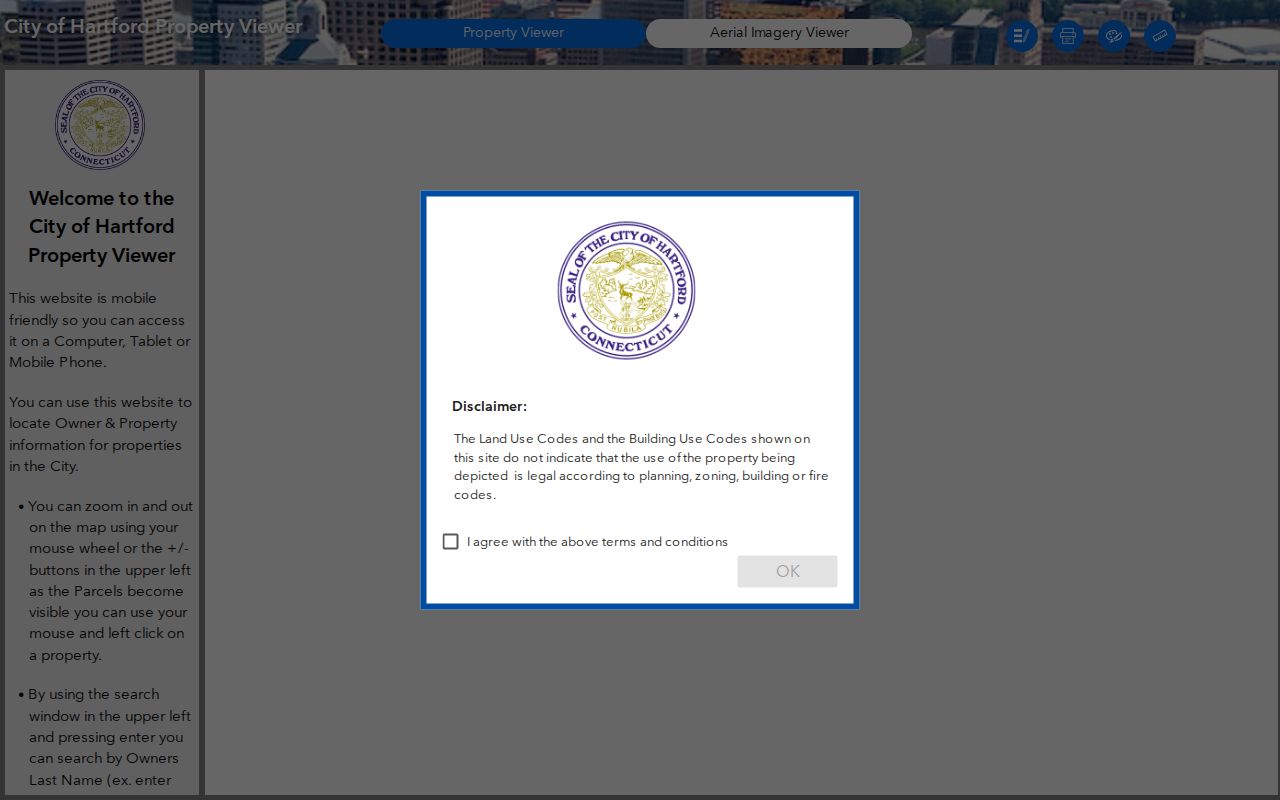
The map is a research bridge. Copy the parcel number and LegalRef, then compare the situs and mailing fields before moving to deeds or tax records.
The underlying parcel service also shows the technical field layer used by GIS. View Hartford’s parcel REST layer for the available owner, address, transaction, legal, and building fields.
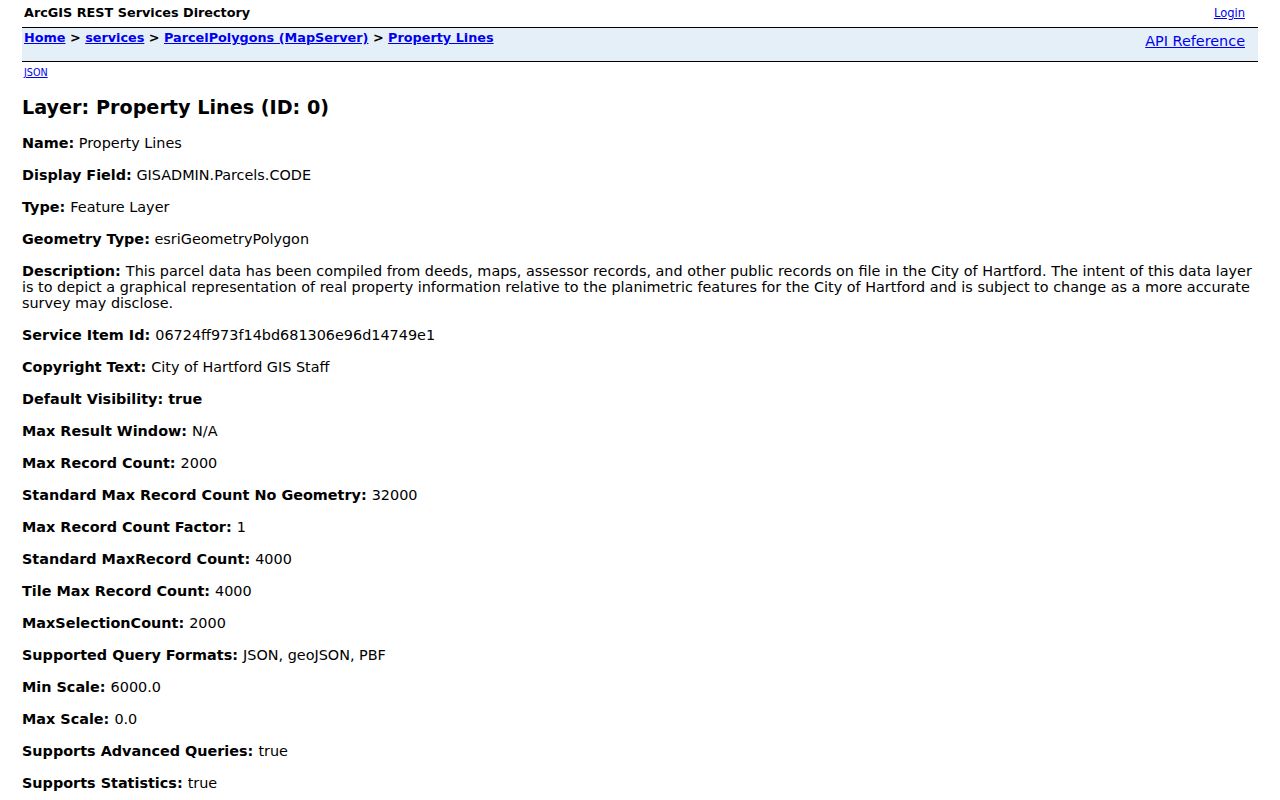
Use the LegalRef and TaxMap as continuity clues. A graphical parcel line can change with updated public data and is not a survey or title opinion.
| Viewer field | How it helps |
|---|---|
| Parcel Number / GIS PIN | Bridge between map, tax card, deed, and plan references. |
| OwnerFullName | Assessed owner name; compare with deed role and date. |
| Mailing address | Correspondence destination, which may differ from the physical parcel. |
| LastGrantor / LastSaleDate | Starting clue for a SearchIQS deed-chain search. |
| LegalRef / TaxMap | Bridge across street-number, subdivision, and parcel changes. |
Hartford Resident Lookup: Voter Status
The Connecticut Secretary of the State voter lookup is a named-person route. Hartford’s registrar page sends searchers to the state tool and handles local polling, canvass, correction, and district questions. The live state form was blocked during inspection, so exact button labels and full field behavior should be checked at the official link rather than guessed. A responsible search uses a name and the permitted confirmation detail, then stops at the status or polling answer needed.
Connecticut’s current public split matters. The registry framework can include a name, former name, residence, former residence, voting district, party affiliation when applicable, and election participation indicators. Public Act 26-1, §96 keeps the month and day of birth out of released information, leaving only the year. Full driver-license and Social Security credentials, ballot choices, and protected voter addresses are not ordinary public lookup fields. A voter result therefore cannot prove that everyone at a property is registered or currently lives there.
The state’s voter privacy program under CGS §9-50(d) lets a qualifying person submit a sworn safety statement so the name and address are withheld from the official registry list. The separate Address Confidentiality Program can supply a substitute mailing address. A missing result may be a protection or a maintenance issue, not evidence that a person never lived in Hartford.
The captured state form is useful as a reminder to use the official route. Check the Connecticut voter lookup and use the Hartford registrars for a correction or polling-location question.
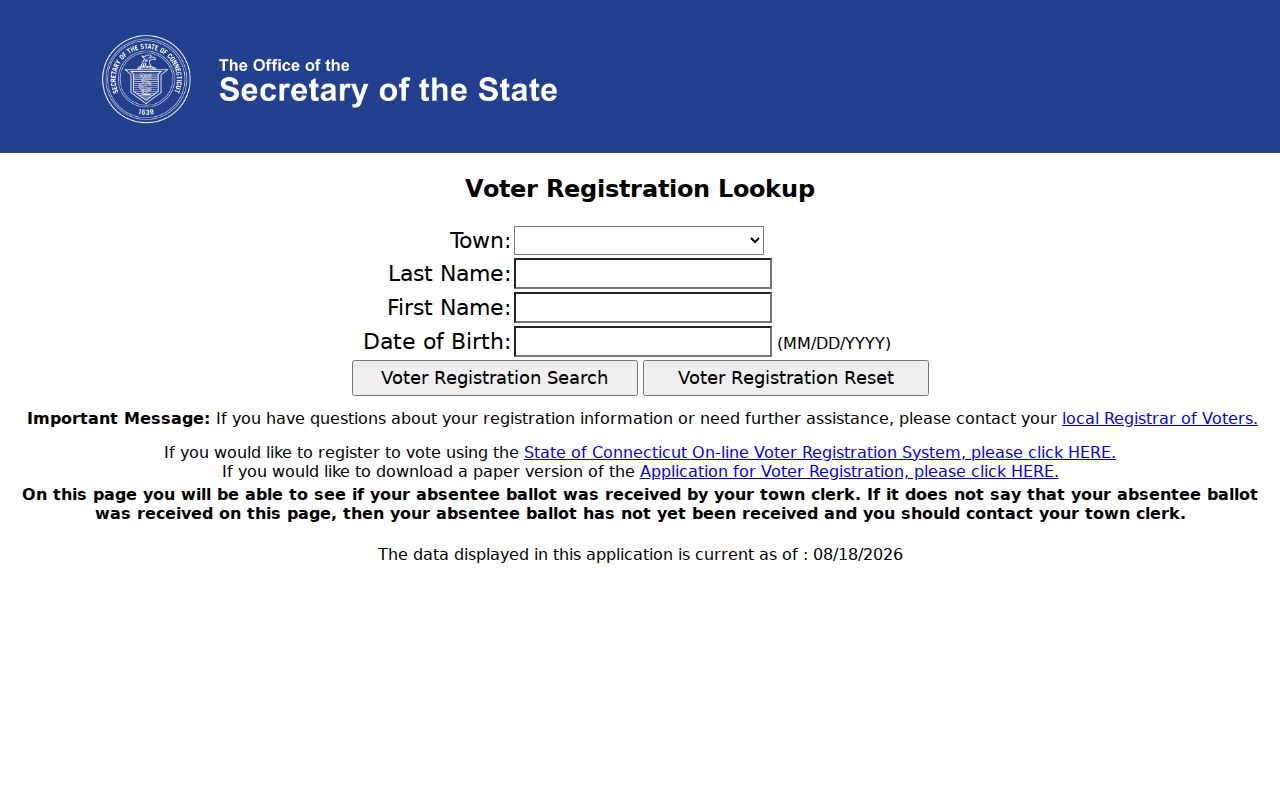
In 2026, the Secretary of the State also described a GIS-based TotalVote upgrade whose testing found district-assignment issues and small sliver districts. Address-to-district results can change as the state improves geographic precision.
Hartford Resident Records: Deeds
Hartford land records are municipal records. SearchIQS guest search advertises a Hartford index, while the Town and City Clerk remains the custodian. The precise availability PDF places land-record index data from January 2, 1964 through December 27, 2001, with images from December 28, 2001 forward. Maps reach back to August 1, 1863. Current SearchIQS help gives a different older image boundary, so recheck the live source before promising an image.
Search by Party 1 or Party 2, date range, document group, document description, town, book and page, instrument number, or case number. “Grantor” means the party giving an interest; “grantee” means the party receiving it. A deed may name a person, trust, estate, or company. Search name variants and read the legal description instead of treating a street address as the whole chain.
- Index
- A catalog entry that points to a recorded instrument. It may be free while the image is absent or priced.
- Image
- A scan of the recorded instrument, available only where the portal and record allow it.
- Legal description
- Deed or plan language identifying the land, which can survive a street-number or parcel change.
- Chain of title
- A backward sequence of recorded transfers, not a complete legal opinion by itself.
If an index entry has no image, Hartford clerk instructions give an offline route. Call 860-757-9749 and ask about a mail request, payment, and any current recording or copy fee. Before 1964, use clerk volumes, microfilm, library catalogs, or archive help rather than treating a blank online result as no deed.
Hartford Directory Sources Today
No single current roster covers every Hartford household. Each source has a different subject, date, and access rule. Property records are strongest for assessed ownership and parcel location. Voter tools are for a named registration question. Deed entries show parties to instruments, not a household count. Permits and 311 requests put people or events beside an address, but they are transaction records. Community plans and meeting information describe civic geography without publishing private membership rolls.
| Source | What it can show | Custodian | Access point |
|---|---|---|---|
| Property viewer / assessor | Assessed owner, parcel, situs, mailing, characteristics | Hartford Assessor / GIS | Public map and REST layer |
| Voter lookup | Named registration status, district, polling route | Connecticut SOTS / Hartford ROV | State lookup and local office |
| Land-record index | Grantors, grantees, instruments, dates, book and page | Hartford Town and City Clerk | SearchIQS and clerk fallback |
| Permits and 311 | Address-linked projects or service requests | Hartford Development Services / 311 | Public lookup or request channel |
| Library collections | Older occupants, addresses, obituaries, maps, yearbooks | HPL / HHC and archives | Reference help and catalog search |
Source type matters as much as the name. An official record has a stated custodian and a defined purpose. A commercial search tool may combine public leads into one result, but its source dates and matching rules may be unclear. A library or archive collection can be strongest for older years even when no current portal exists.
| Source type | Best use | Limit to keep visible |
|---|---|---|
| Official Hartford or Connecticut record | Answer the specific property, voter, deed, court, or vital question | Eligibility, privacy, date, and custodian rules apply |
| Commercial search category | Surface possible public-record leads in one view | Freshness, matching, authority, and charges may be unclear |
| Library or archive collection | Trace older occupants, streets, newspapers, and directories | Access may be reference-only, on microfilm, or not digitized |
A current “directory” is therefore a set of records joined by a parcel, name, date, or address. The Hartford by-street search is the better route when the address is known; a one-person question needs separate name, court, vital, and privacy checks.
Hartford Resident Records: Court Names
The Connecticut Judicial Branch party search can be useful when a name appears in a Hartford civil, family, small-claims, property, or municipal matter. Its form includes Party Last Name, optional first name, location, case category, case type, sort order, and name-search modes such as Starts With, Contains, Is Equal To, and Sounds Like. Hartford Judicial District is HHD; the Hartford session code is HFH. The search supports a lead, not a certified court file.
Public result displays may show case name and type, docket number, file and return dates, court location, last action, party role, attorneys, entry number, disposition, disposition date, and judge or magistrate. Some self-represented contact fields can appear. Sealed, protected, juvenile, family, erased, and removed matters may not appear. The courthouse clerk or public-access terminal is the fallback for an older or incomplete file.
The official party-search screen is the right place to see the location and name controls. Open the Connecticut civil party search and verify a docket or disposition with the clerk before treating a match as identity evidence.
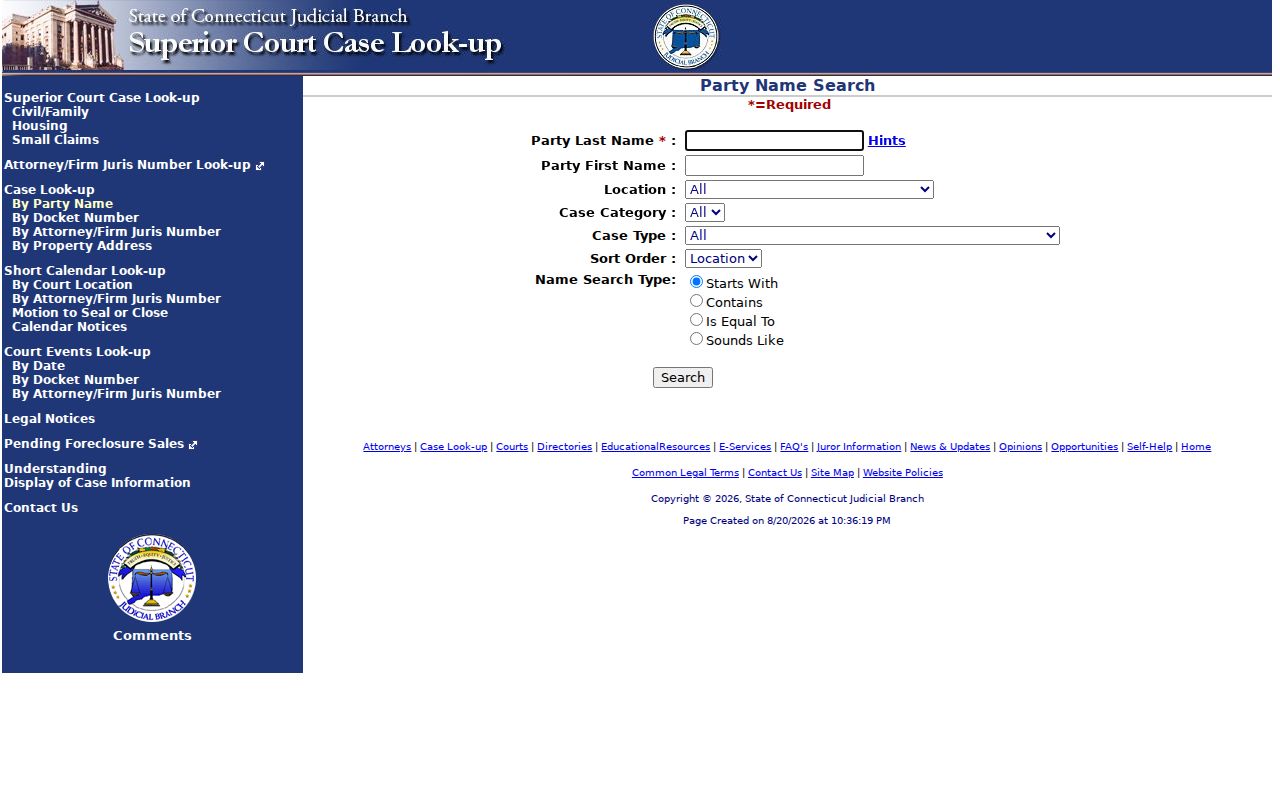
For federal matters, PACER is separate. For an estate, Hartford Probate District PD-01 has its own lookup and access rules. Keeping those systems separate prevents a court name from being mistaken for a current Hartford address.
Hartford Vital Records by Type
Birth, death, and marriage records do not share one access rule. Hartford’s local registrar handles events in the city, while the Connecticut Department of Public Health State Vital Records Office provides the statewide route. Modern certificates are requested through forms or an official ordering channel, not an unrestricted resident-name index. The event town still matters, especially for a recent local copy or a marriage recorded less than four months ago.
| Record | Hartford / state path | Research limit |
|---|---|---|
| Birth | Local registrar or DPH State Vital Records | Under 100 years, eligible requester and ID rules apply; older records have broader genealogical access. |
| Death | Event town or DPH statewide form | Adults can request a certified copy; post-July 1, 1997 Social Security fields are restricted. |
| Marriage | Hartford or event town, with DPH alternative | Adults generally can obtain certificate information; spouses’ Social Security fields are limited. |
| Divorce | Connecticut Judicial Branch clerk | A docket is not the same as a certified judgment or open family file. |
The captured forms document requester name and address, relationship, reason, signature, copies, ID, and payment. Town birth copies list $20 full-size and $15 wallet options; state birth copies list $30 each. Death and marriage copies generally list $20. Check the current form before sending money, and use the town counter, mail route, State OVR, HPL, State Library, church records, or newspapers as appropriate.
Hartford Resident Records: Probate
Probate is a useful resident-record path when the question concerns an estate, fiduciary, heir, or older property connection. The Hartford Probate District is PD-01 at 250 Constitution Plaza, and its public case lookup covers decedent estate and trust data from January 5, 2011 forward. The search fields include Case Type, District, Status, Last Name, and First Name. Select Hartford rather than assuming every “Hartford County” result belongs to today’s city boundary.
A probate match may identify a decedent, fiduciary, heir, attorney, or case status. It does not automatically provide a current address. Documents have separate controls. Interested parties may use an eFiling access code, while closed nonconfidential files can sometimes be reviewed through a public computer or paper file. Sealed and confidential material remains protected.
Use the Connecticut Probate case lookup for the name and case lead, then contact the Hartford Probate clerk at 860-757-9150 for document access. Historic packets and estate material may require State Library or archive research.
Hartford Resident Directories: Libraries
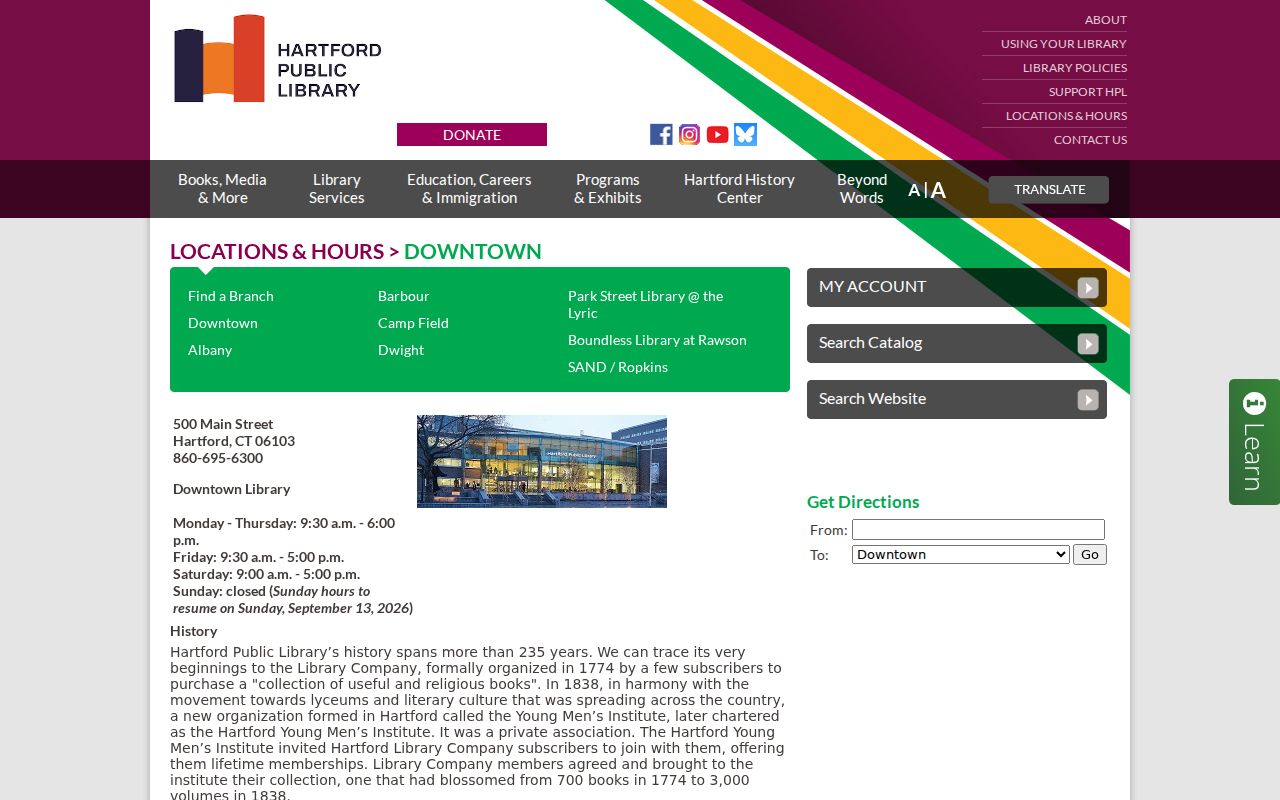
Hartford Public Library is the practical offline bridge when a web search runs out of years or scans. The Downtown branch at 500 Main Street houses the Hartford History Center, and the SAND/Ropkins branch has a History Center Annex. HPL describes city directories, Hartford newspapers and microfilm, obituaries, yearbooks, maps, photos, and Hartford Town and City Clerk Archives as local-history resources. Ask with a surname, street, and approximate year. “City directory,” “reverse directory,” “telephone directory,” and “house or family address book” can lead to different shelves.
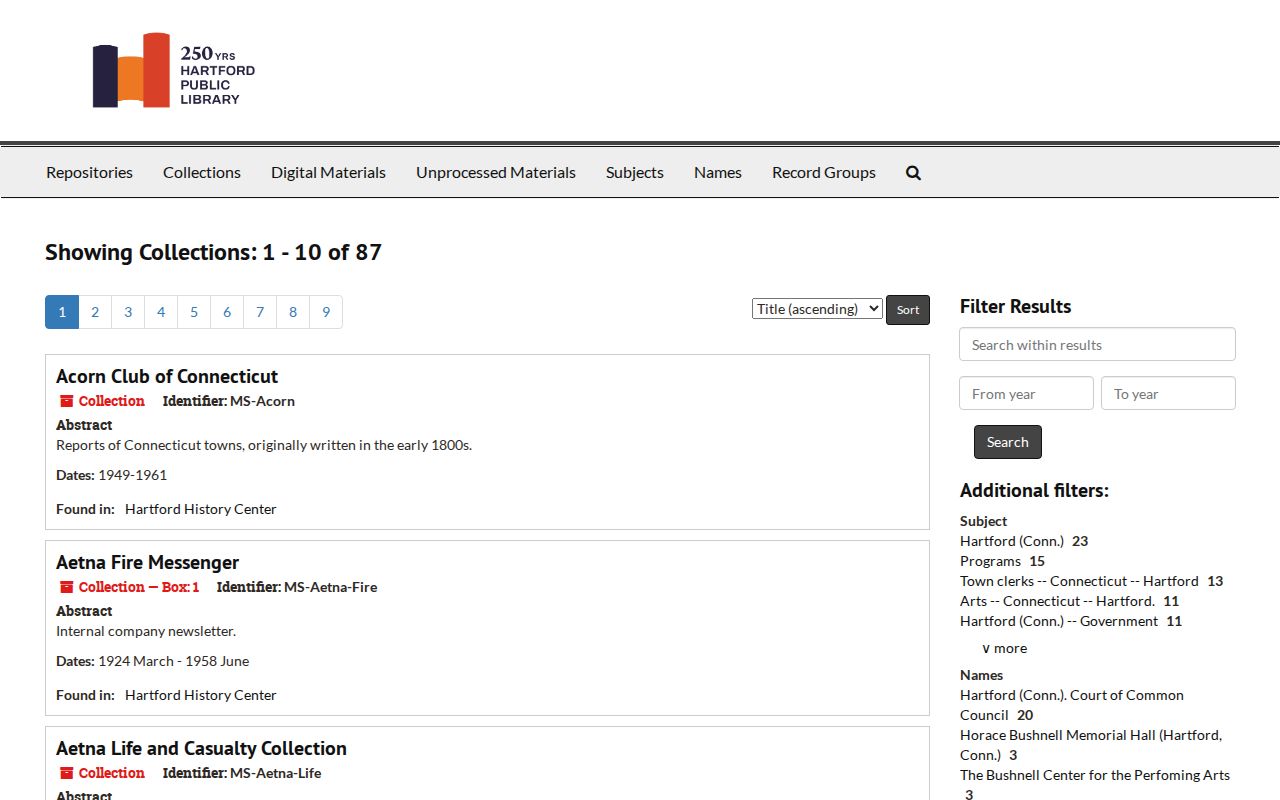
The HPL archival catalog describes Hartford Town and City Clerk Archives with an entire collection date span of 1635-2010, while individual series have narrower majority runs. Connecticut State Library History and Genealogy routes researchers to census, cemetery, church, town-document, court, and FamilySearch material. The Connecticut Historical Society adds community, ethnic, newspaper, deed, and directory finding aids. An online finding aid does not guarantee that the box is on site; the State Library has described off-site compact-shelving work and a gradual return beginning in 2026.
The archival catalog gives a sense of the local record shelf. Search the HPL archival catalog for Hartford clerk, city, neighborhood, or street material.
The Downtown History Center page supplies the access point for reference help and current hours. Check HPL Hartford History Center access before planning a visit.
HPL reference can also help distinguish a true gap from a missing scan, a suburban supplement, a changed street name, or a collection that is temporarily off site.
Hartford Historical Directory Sources
Hartford’s historical resident directories form a long but uneven shelf. Gardner’s 1840 directory includes a street guide, occupations, business addresses, and an “h” shorthand for home. Geer’s runs appear for 1842, 1846, many 1850s, 1860s, and 1870s years, and 1887-1896. Later supplements include a 1906 house and family address book and suburban titles from 1913 and 1915. Price & Lee has a 1959 catalog item. The exact year gaps matter. Not seeing a name in a missing volume does not prove that the person was absent.
Read a directory line closely. A grocer may have a store address first and an “h” home address later. “Widow” or “boarding house” is a status or lodging clue, not a complete household list. The Connecticut Historical Society notes separate “Colored Persons” listings in Geer directories from 1843 through 1867/8, so a surname search must check both the general and separate sections. OCR can lose apostrophes, punctuation, initials, and street abbreviations.
For a street-first historical answer, a reverse or criss-cross volume can turn a house number into an occupant; a name-first directory can then be paired with census, deed, vital, obituary, or probate evidence. The fuller collection map lives in the Hartford city directories collection guide.
Hartford Resident Directory: ZIP Labels
ZIP geography is a useful filter, not a city-boundary rule. USPS offers search modes by address, by city and state, and by ZIP to cities. Hartford’s ordinary physical-city tests often begin with 06103, 06105, 06106, 06112, 06114, and 06120, but downtown, PO-box, unique, and institutional codes also use the Hartford postal label. East Hartford and Wethersfield routing can appear beside Hartford in postal grouping material.
The assessor REST layer has a mailing Zip10 field, while Accela exposes ZIP in its address form. A mailing ZIP query answers where owner correspondence goes, not which parcels physically sit inside a ZIP. Use USPS by Address for final normalization, then compare the returned label with the Hartford situs, municipal parcel, neighborhood map, and legal description. The detailed ZIP coverage and boundary cautions belong in the ZIP Directory.
Hartford Resident Records: Beyond Web
Several useful Hartford channels are not resident directories at all, but they add context. Accela can connect a property to a permit, licensed professional, record type, date, status, or inspection milestone. Hartford 311 can locate phrase- or address-based service requests, including zoning-violation and street-condition categories. Parks and Cemetery staff can answer burial-list or cemetery-archive questions even though no single public name-search interface was located. Business.CT.gov and eLicense can explain a business or credential tied to a name, while a local trade-name filing remains a City Clerk record.
When a portal fails, use the counter, phone, mail, library, or written-record route documented by the custodian. A Connecticut FOI request should name the office, date range, record type, and preferred format. The agency can provide a nonexempt or segregable portion, but FOI does not override a protected voter address, a birth-record eligibility rule, a sealed court file, or a confidential adoption record.
Check the source before paying. Connecticut consumer alerts describe official-looking deed-copy, jury-duty, state-marshal, business-registry, and unclaimed-property scams. Reach Hartford.gov, portal.ct.gov, the Judicial Branch, HPL, or the State Library through a typed official address and compare any fee with the custodian’s current instructions.
Hartford has a useful local quirk: the county label is old and important for history, but the working records map is municipal and statewide. That small distinction keeps a search from ending at an office that does not exist.
Hartford Resident Directory Limits
Property, voter, deed, court, vital, permit, and directory records each describe a role at a date. They do not form a complete list of current household members. A property owner can be an absentee owner, trust, estate, or company. A voter can be protected, inactive, or registered at a former address. A directory entry can be a year behind. A court party can be an attorney, fiduciary, plaintiff, or defendant without living at the address attached to a display.
Connecticut DMV personal information is restricted by the Driver Privacy Protection Act and CGS §14-10. Utility customers, mail recipients, private phone and email details, and current household-member identity were not located in the public sources reviewed. The Address Confidentiality Program and Voter Registry Privacy Program can intentionally remove a name or real address from the expected trail.
Lawful personal use. Hartford records are for family history, civic research, reconnecting, estate work, and other lawful purposes. Do not use a name or address to stalk, harass, threaten, or harm anyone. Verify an important record with its custodian.
A careful Hartford residents directory search ends with a dated source, a clear role, and a note about what remains unknown. That is more useful than a long list of names with no custodian or context.